The StamiNa+ range
Sodium-Ion Batteries Uganda: the StamiNa+ Range
Sodium-ion batteries Uganda can rely on, from a Ugandan company owned and led from Wakiso District and backed by AceOn Group UK's 30+ years of British battery expertise. StamiNa+ is our sodium-ion range: cobalt-free, lithium-free and nickel-free chemistry, rated for discharge from −40°C to +70°C, with a UK-developed battery management system in every pack.
Sustainable. Reliable. Staying Power.
- Nominal voltage
- 12 V DC
- Discharge temperature
- −40°C to +70°C
- Chemistry
- Cobalt-free
- Certification marks
- CE · UN38.3 · WEEE
What sodium-ion is, and why the chemistry matters
A sodium-ion cell moves sodium ions between its electrodes to store and release energy, in place of the lithium ions used by the batteries most people are familiar with. Sodium is one of the most abundant elements on earth. That single substitution changes the economics and the safety profile of the finished pack, and it removes three of the most contested materials in the battery supply chain at once: there is no lithium, no cobalt and no nickel anywhere in the cell.
Every StamiNa+ pack is built on the NaCR32140-MP10 cell in the 32140 cylindrical format, assembled to a 12 V nominal configuration with passive cell balancing. A smart battery management system sits on top, protecting against over-charge, over-discharge, over-current and short-circuit conditions. That management system is AceOn Group UK engineering, and it is rated to operate from −40°C to +85°C — a wider window than the cells themselves need, so the protection never becomes the limiting factor in the heat.
The packs carry CE, UN38.3 and WEEE marks on the product label. UN38.3 is the transport-safety qualification for shipping cells and batteries, which matters for anyone moving stock across borders in the region.
Sodium-Ion Batteries Uganda Can Rely On
Four things make this chemistry a good fit for conditions across Uganda and East Africa — high ambient temperatures, long distances, intermittent grid power and supply chains that punish anything exotic.
Enhanced safety
Stable chemistry with no thermal-runaway risk. Abuse testing returned no fire and no explosion. Safe to ship, store and use anywhere.
Wide temperature range
Operates from −40°C to +70°C, with the battery management system itself rated to +85°C. Built for real African heat and remote conditions.
Sustainable materials
Made from abundant materials. No lithium, no cobalt, no nickel. A cleaner supply chain and a lower cost base.
Long service life
Thousands of cycles of dependable staying power. The figure differs by product and is quoted per product below — never as one number for the range.
Cycle life is quoted per product, never as a single figure for the range. The soft packs are rated ≥5,000 cycles at ≥70% capacity; the PES Lite 120Wh is rated ≥3,000 cycles at 80% depth of discharge; the NA12100 12V 100Ah is rated ≥2,000 cycles at ≥70% capacity. They are measured differently and are not interchangeable.
How sodium-ion compares with what most sites run today
Most homes, clinics, schools and small businesses in the region are running one of three things today: a lead-acid bank, a lithium-ion pack, or a diesel generator. Each has a reason it got chosen, and the honest comparison is the one that puts the criteria that actually decide a purchase side by side — how the chemistry behaves when it fails, how it copes with heat, how long it lasts, and how exposed its materials are to price shocks.
The lead-acid, lithium-ion and diesel figures are typical for each technology category, not claims about any particular product or manufacturer. Real-world figures vary by design, duty cycle and installation. The sodium-ion column is different in kind: those are AceOn StamiNa+ product specifications, taken from our datasheets.
Shared technology across the range
These figures apply to every sodium-ion product we supply. Capacity, dimensions, weight and cycle life vary by product and are listed on each product page.
Cycle life and charge/discharge temperature limits differ by product — see the individual product pages. Safety: do not disassemble, crush, puncture or short-circuit. Do not dispose of in fire or water.
Four products in the range
One chemistry, four ways to buy it: bare packs for manufacturers, a finished portable unit, a complete off-grid lighting bundle, and a 100 Ah battery for solar storage and lead-acid replacement. All four are sodium-ion batteries Uganda customers can buy directly from us in Uganda, built on the same sodium-ion chemistry and the same battery management system.
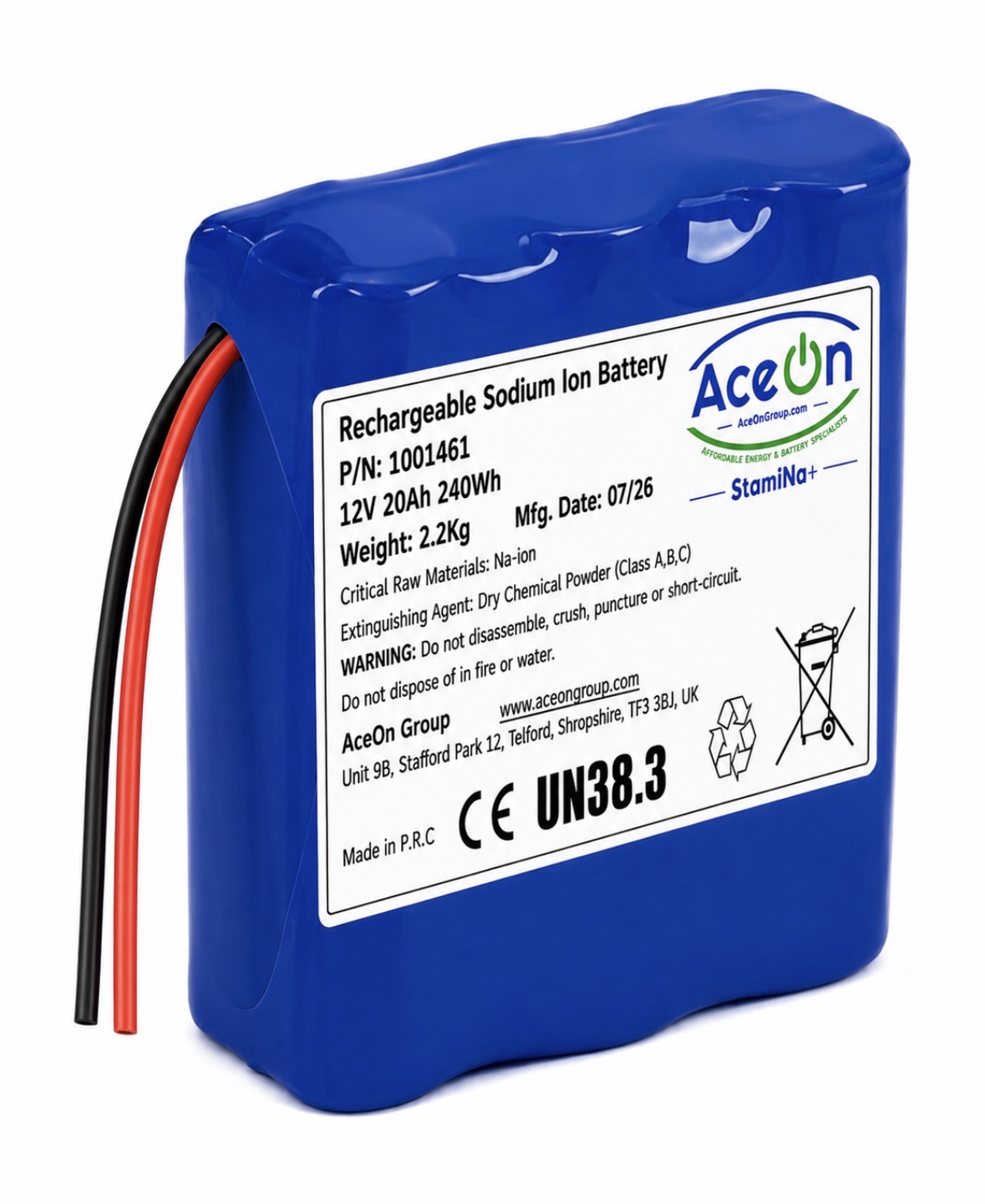
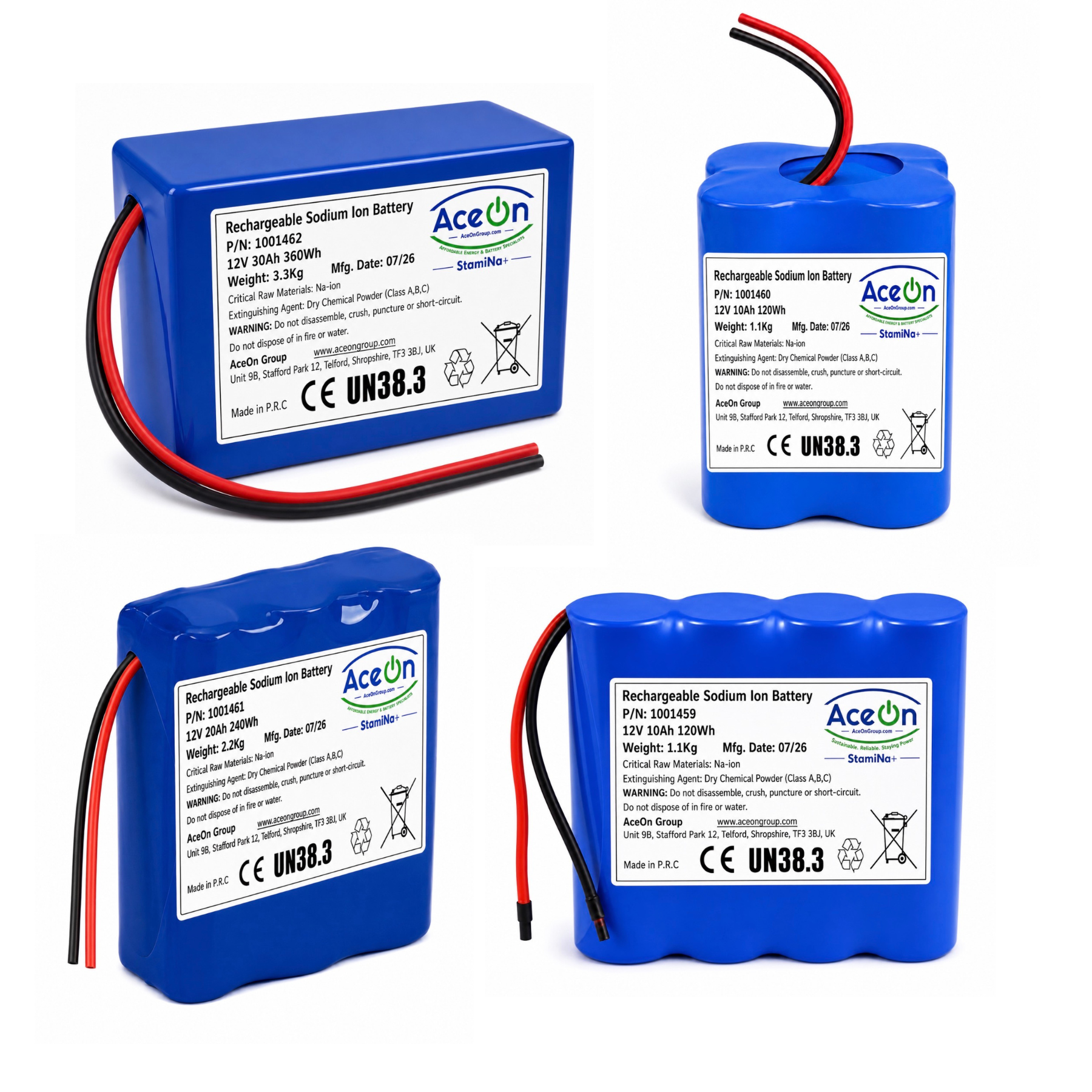
Sodium-ion soft packs
10 Ah to 30 Ah · 120 Wh to 360 Wh
OEM packs for power tools, medical devices, robotics, security systems and solar street lighting.
View specifications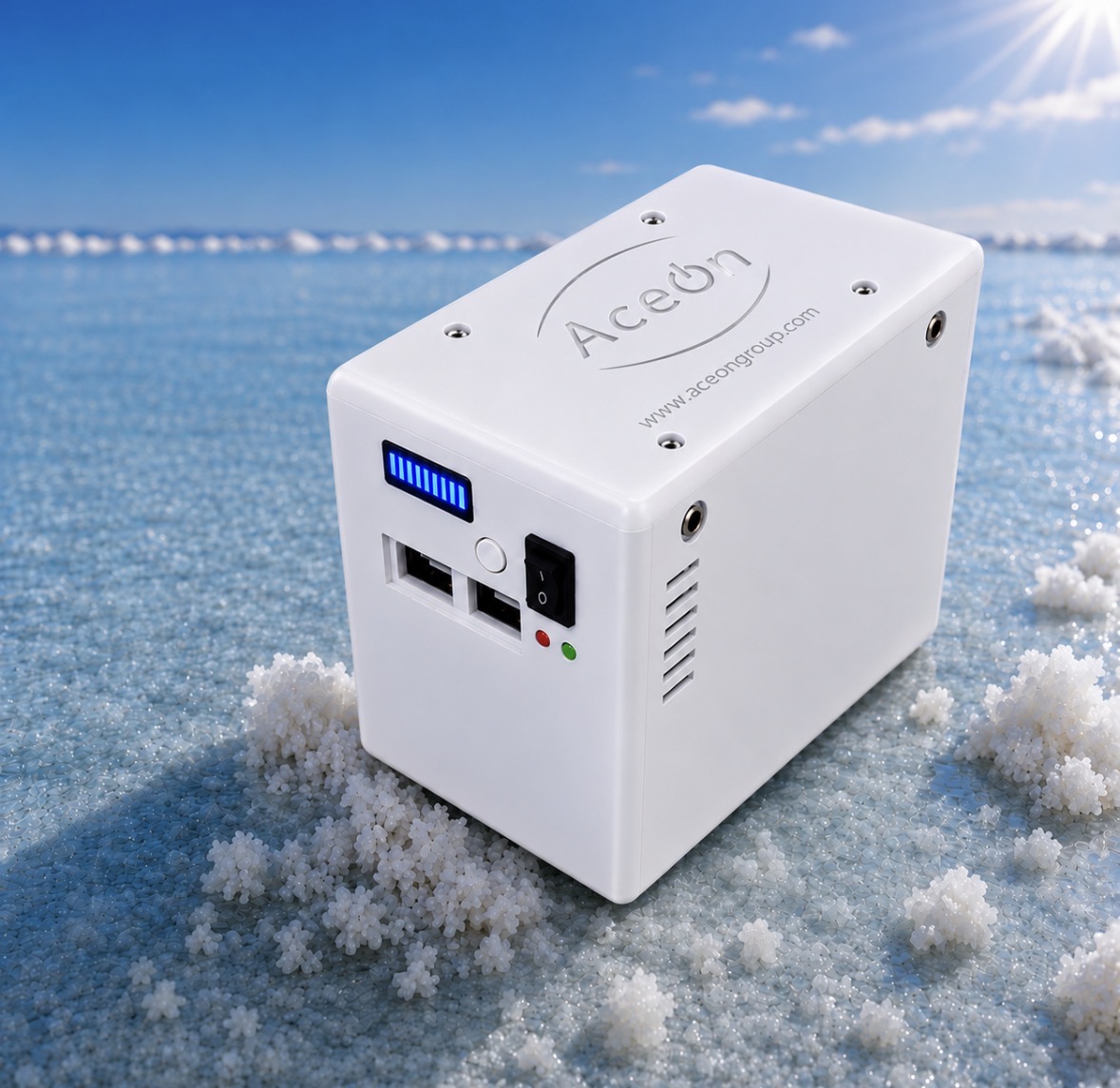
PES Lite 120Wh
10 Ah · 120 Wh
Portable power station with two USB-A outputs, charged from mains or solar.
View specifications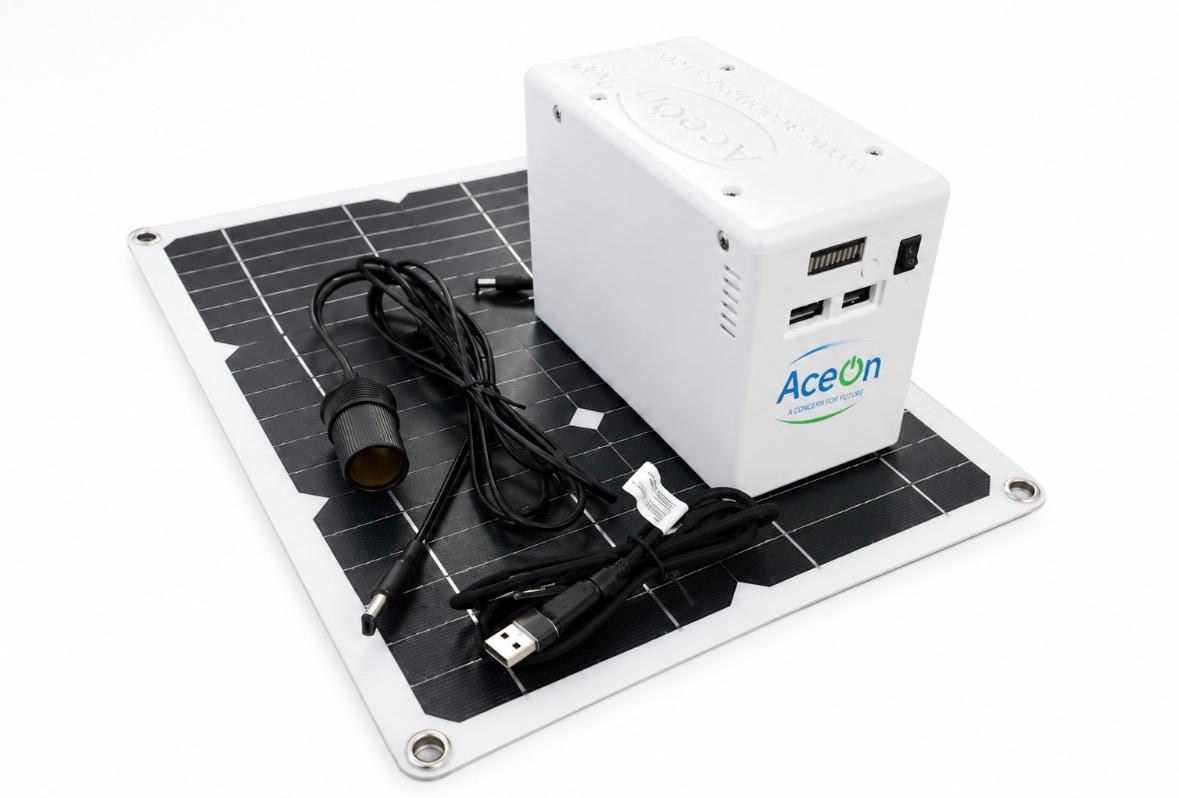
PES 120Wh Lighting Kit
120 Wh
Foldable solar panel, sodium-ion bank and LED lighting for off-grid homes.
View specifications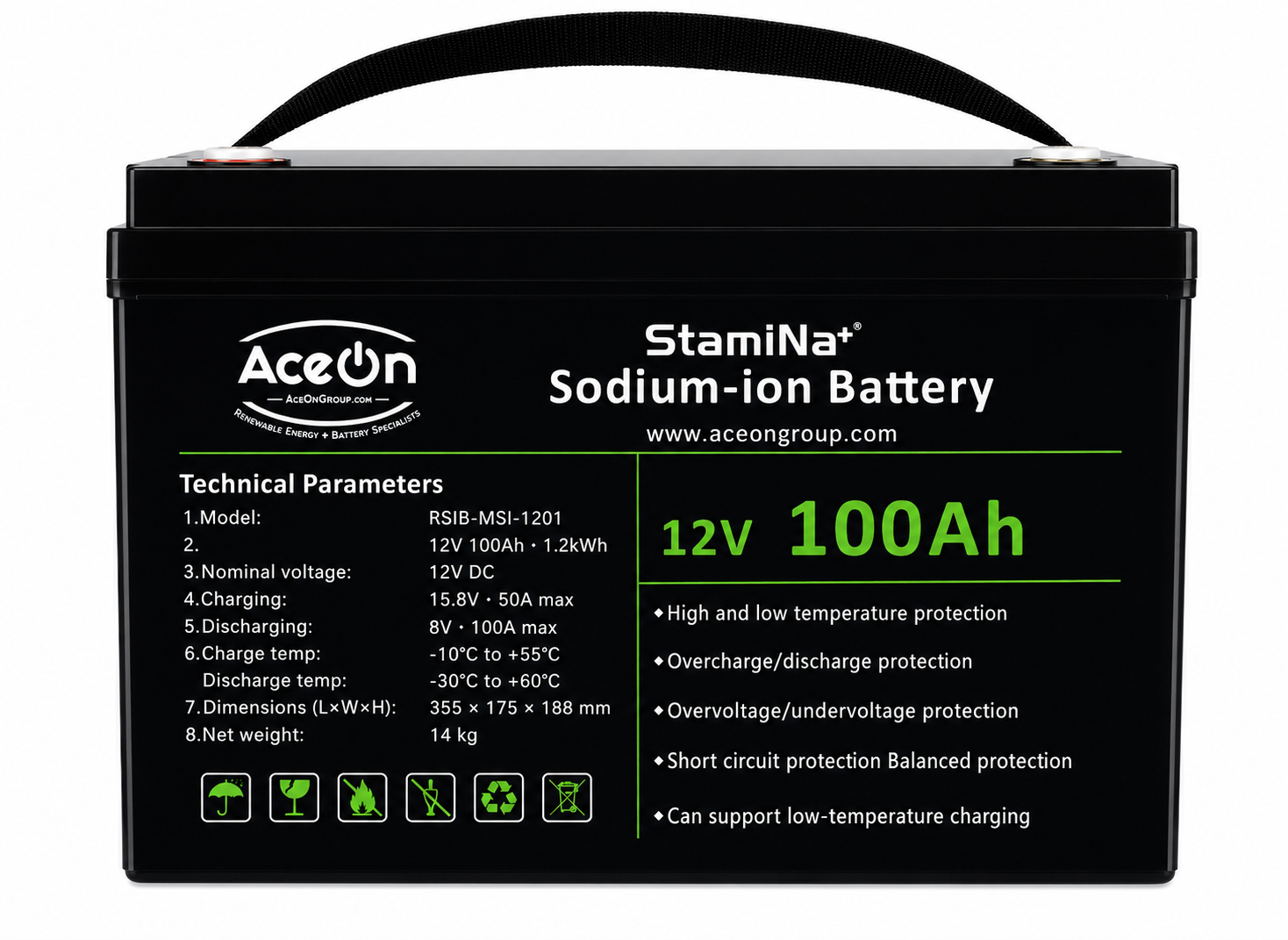
NA12100 12V 100Ah
100 Ah · 1.2 kWh
Solar storage and a drop-in lead-acid replacement, with 100 A maximum discharge.
View specifications
Talk to us about sodium-ion
Tell us the application, the quantity and where it needs to go. Our Uganda team will come back to you within two working days.